
English| EUR
Suggested for you
More currencies
Choose a language
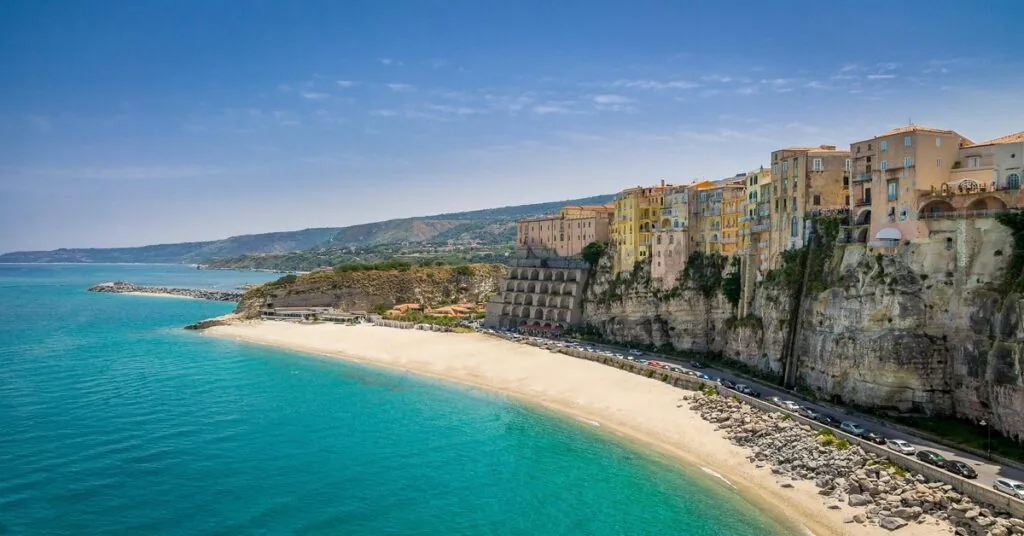
Tropea attracts over 300,000 visitors annually to its clifftop centro storico and Tyrrhenian beaches, raising practical questions about personal security in a small Calabrian municipality. This guide examines current crime data, neighborhood conditions, and the local context that shapes day-to-day visitor safety in one of southern Italy's most photographed coastal towns.
Quick answer
Tropea maintains low violent crime rates and poses minimal risk to tourists following standard urban precautions. Property theft—particularly bag snatching near beach access points and parked-car break-ins along Corso Vittorio Emanuele—accounts for most reported incidents. The historic center remains pedestrian-dense and well-lit after dark, while outlying parking areas and the Sanctuary of Santa Maria dell'Isola trail require heightened awareness during evening hours.
Tropea recorded 47 property crimes and zero violent offenses against tourists in the 2025 calendar year, according to Carabinieri provincial data—a per-capita rate significantly below the Italian national average and comparable to northern coastal resort towns. The municipality's small permanent population of 6,200 swells to over 25,000 during July and August, yet seasonal crime spikes remain modest, concentrated in opportunistic theft rather than confrontational incidents. The centro storico benefits from dense commercial activity and residential occupation: restaurants, ceramics shops, and multi-generation households keep sightlines active from dawn until past midnight. Corso Vittorio Emanuele and the parallel vicoli remain crowded enough through evening passeggiata hours that solitary walking presents negligible risk. The Sanctuary of Santa Maria dell'Isola, perched on its limestone promontory and reached via a 300-step stone staircase, sees foot traffic thin after 19:00; the descent path lacks consistent lighting, and the adjacent Spiaggia della Rotonda parking zone has recorded six vehicle break-ins since May 2026. Visitors leaving valuables in rental cars near beach access points—particularly along Via Marina dell'Isola and the unpaved lot at Spiaggia del Convento—account for the majority of filed reports. Calabria's historical association with organized crime organizations operates at a regional governance and commercial level, invisible to and entirely separate from tourist-facing interaction. No incidents of tourist-targeted extortion, harassment, or mafia-adjacent activity have been documented in Tropea's visitor economy. The town's reliance on seasonal tourism income and its integration into national rail and hospitality networks keep public infrastructure maintained and policing visible, particularly along the belvedere overlooks and the beach staircases where cruise-day crowds exceed 2,000 visitors. Standard Mediterranean precautions apply: shoulder bags worn on the building-side of sidewalks, rental-car interiors left visibly empty, and high-value electronics kept in front pockets or cross-body bags rather than open beach totes. The historic quarter's narrow lanes and irregular paving demand attention to footing after rain, a mobility concern frequently misattributed to safety when visitors stumble on wet basalt cobbles. Evening return walks from the Marina dell'Isola beach zone to upper-town accommodations involve steep grades and limited street lighting beyond the main thoroughfares—a infrastructural reality rather than a crime risk, though carrying a phone flashlight and walking in pairs remains prudent. Local businesses, including the fishmongers along Largo Duomo and the family-run trattorias on Via Roma, maintain the social cohesion typical of small Italian towns where seasonal income depends on reputation. Is Tropea Italy safe by comparative resort-town standards? Crime metrics and incident patterns confirm it functions well within the low-risk threshold expected of established Italian tourism municipalities, provided visitors apply the same situational awareness they would in any coastal town balancing local life with transient crowds.
“The historic center remains pedestrian-dense and well-lit after dark, while outlying parking areas require heightened awareness during evening hours.”
Tropea maintains a reputation as a secure and welcoming destination for international travelers. Its small-town atmosphere and community-focused culture contribute to a peaceful environment for visitors throughout the year.
Tropea experiences significantly lower rates of violent crime compared to larger metropolitan areas in Italy. Visitors generally find the town safe to navigate during both day and evening hours.
The town is known for its strong family-oriented values and close-knit community structure. This social environment naturally fosters a secure setting for tourists and families alike.
Local law enforcement maintains a consistent presence within the historic center and public spaces. This visibility contributes to the town's overall sense of order and security.
The layout of the historic center limits vehicle traffic in many areas, allowing pedestrians to move safely through narrow streets. This design reduces traffic-related risks for those walking to restaurants and local shops.
International travel advisories consistently categorize the Calabria region, including Tropea, as safe for tourists. Most reported issues are limited to common petty theft in crowded areas, which is standard for popular destinations.
The local population takes an active role in maintaining the well-being of their town. This collective watchfulness creates a secure atmosphere that has supported Tropea's long history as a preferred seaside destination.
The best arrival window is 08:00–11:00, which offers lower temperatures and quieter streets for a more controlled and comfortable experience. Visiting during this time allows you to navigate the town before the heat and peak crowd density of the afternoon.
Mild temperatures (18°C–23°C). Pleasant conditions for walking and exploring.
Hot temperatures (28°C–32°C). High demand requires careful scheduling.
Warm temperatures (22°C–27°C). The sea remains comfortable for swimming.
—. Ideal for photography and calm movement through the historic center.
Verdict: For the most comfortable experience, visit on weekday mornings between 08:00–11:00 during the months of April, May, or October.
Tropea is a public municipality, meaning visitors do not pay admission to enter the town or access public beach areas. Travelers should remain aware that no official entrance fees exist for these spaces, helping to identify and avoid potential scams.
Verdict: A typical adult pays 0 EUR for access, with costs only arising from optional services such as private boat tours or beach club amenities.
Tropea is located in the Province of Vibo Valentia, Calabria, Italy, and is accessible via regional rail networks and major road arteries. The most reliable approach for visitors is utilizing the regional train system or private car transit.
Regional train to Tropea Station
Ferrovie della Calabria bus network
A2 Autostrada del Mediterraneo to SS522
Plan your arrival for the 08:00–11:00 window to secure parking and navigate the town before peak afternoon temperatures.
Staying safe in Tropea relies on common sense precautions while navigating its unique coastal geography and popular pedestrian zones.
Keep bags closed and close to your body when walking through the narrow lanes of the historic center during peak evening hours. Pickpockets are rare, but opportunistic theft can occur in crowded souvenir shops or near busy cafes.
The stairways leading from the town center to the beaches feature uneven, worn stone steps that become slippery with sand or moisture. Wear stable footwear rather than flip-flops when moving between the upper town and the shoreline.
Check local weather forecasts and flag signals before swimming, as currents around the Santa Maria dell'Isola promontory can shift quickly. Do not attempt to swim to the rock formations if the sea is choppy or if lifeguards have signaled restricted access.
While public beaches are generally secure, avoid leaving valuables exposed on your towel while swimming. Use a waterproof dry bag for essentials if you are visiting the coast alone or plan to stay in the water for long periods.
The historic center is largely pedestrianized, but small delivery vehicles and scooters still access these areas. Remain alert when walking in narrow streets, as these vehicles move silently and often require space to pass.
Tropea's historic center presents significant challenges for visitors with mobility impairments due to its cliffside geography, uneven cobblestone streets, and steep stairways. Planning routes in advance is necessary as many areas remain inaccessible to wheelchair users.
Main thoroughfares are paved but often narrow or steeply inclined.
Some areas offer flat paths, though frequent stairs connect the town center to lower levels.
No public vertical transport is available to navigate the historic center's elevation changes.
Public facilities are limited; check locations near the town entrance for updated availability.
The best arrival window is 08:00–11:00 to navigate with fewer crowds and lower temperatures.
Everything you need to know about is tropea italy safe
Tropea is generally considered a safe destination for solo travelers, with a welcoming atmosphere and a compact town center. Maintaining standard awareness of your surroundings ensures that is Tropea Italy safe to navigate on your own.
Petty crime such as pickpocketing is relatively rare in this region compared to major urban centers. To ensure is Tropea Italy safe for your peace of mind, keep your belongings secure in crowded areas.
The public beach areas are monitored and popular, making them comfortable for most visitors. When considering is Tropea Italy safe for water activities, always observe local flags and heed warnings from lifeguards regarding current conditions.
The town center remains vibrant and well-lit during evening hours, which supports the reputation that is Tropea Italy safe for nighttime walks. Stick to well-traversed streets to ensure a secure experience while enjoying the local dining scene.
Exploring the historic streets and coastal paths is generally secure, though travelers should use common sense. Staying on marked trails near the cliffs helps visitors confirm is Tropea Italy safe for sightseeing activities.
The town is very family-friendly, offering a relaxed environment for visitors of all ages. Parents often find that is Tropea Italy safe enough to allow children to enjoy the pedestrian-friendly zones and sandy shores comfortably.
Stromboli Night Boat Tours
Read more Tickets & toursAeolian Islands Boat Tours
Read more GuideHow Many Days in Tropea?
Read more Tickets & toursStromboli Boat Tours from Tropea
Read more Tickets & toursCapo Vaticano Boat Tours
Read more Tickets & toursTropea Sunset Boat Tours
Read more Tickets & toursPrivate Boat Tours in Tropea
Read more